Catalisa Med

The empty chair gives no warning.
The schedule said you were fully booked.

One in five booked appointments never happens — and the message that would have booked the next one arrived at 10 p.m., when no one was at the front desk. The assistant answers at any hour, triages, books into the real schedule, confirms and sends reminders. It also drafts the visit note, which still goes out signed by the clinician who saw the patient.

This is not a matter of style: Resolution 2,454/2026 of the CFM (Brazil's Federal Council of Medicine) forbids delegating to artificial intelligence the communication of a diagnosis, a prognosis or a treatment decision. The product was built inside that line.

What a full schedule hides

The booked chair that stays empty is the clinic's biggest cost — and the only one that shows up nowhere.

It isn't logged as an expense, it has no invoice, it never reaches the report. It just vanishes from revenue.

20–30%

of booked appointments become no-shows

in clinics with no active confirmation process. One municipal network in São Paulo recorded 21.4% in 2026.

15–30%

of gross revenue walks out the door

in Brazilian clinics and diagnostic centers. For a clinic billing R$ 60,000 a month, that is tens of thousands of reais every month.

87%

book through WhatsApp

it is the channel where appointments are booked, confirmed and canceled — and where most messages arrive after hours.

Sources: Panorama das Clínicas e Hospitais (Doctoralia) · no-show surveys of Brazilian clinics and diagnostic centers. These are industry figures, not ours — on purpose: you can check them without having to take our word for it.

Before you sign up

The three questions that come next.

What does it cost me — and is it worth it?

The math on what the empty chair takes every month, with your own numbers, and what to compare the price against. See the math

Can it run on our own infrastructure?

You can have your own server, domain and brand. It costs more, and it has a consequence we tell you about up front. See both options

And the hard questions?

Who signs, what the AI is not allowed to do, where the data lives, and what happens if it doesn't work. See all twelve

What you hear in a small clinic

Booking the appointment was never the bottleneck.

Good evening, do you take my insurance? I need an appointment this week.

10:14 p.m. · no reply until 8 a.m.

Which doctor should I book with? My knee has been hurting and it won't go away.

7:41 a.m. · the front desk can't triage

Was I able to reschedule? I sent a message yesterday and nobody answered.

9:03 a.m. · already booked somewhere else

With the assistant, all three would have been answered the minute they arrived — and two would have ended with a time booked.

And there is a third pain that shows up on nobody's phone: the medical record written from memory, at the end of the day, for six patients.

The line

One part of the work the machine does end to end. The other it never touches.

The split is neither subtle nor negotiable, and it organizes the entire product. On the left, nothing needs you. On the right, nothing happens without you.

It does on its own

nothing needs you
  • Replies at any hour, including the middle of the night
  • Understands the reason for contact and routes it to the right specialty
  • Recognizes emergency signs and tells the person to seek care
  • Offers time slots that actually exist in that schedule
  • Confirms, reminds and sends the telehealth link
  • Transcribes the visit and writes the draft
The medical record sheet, with the signature line A sheet of ruled paper. On the top half, three lines scribbled in pencil stand for the draft the assistant wrote. A horizontal line crosses the sheet; below it, an ink signature and a released stamp. A pen rests across the line. Visit note draft the assistant wrote it sign here signed the treating clinician released it CRM RELEASED

Only you do

nothing happens without you
  • Say what the person has
  • Prescribe, change, stop or adjust treatment
  • Interpret test results
  • Decide what goes into the medical record
  • Release the document — and only for your own visit
  • Answer for the medical act
From the first message to the visit

Six steps, and none of them waits for someone to be free.

The assistant answers the clinic's WhatsApp using the clinic's own material — insurance plans, address, hours, who sees what — and when the conversation reaches the point of booking, it checks the real schedule and offers slots that exist.

The front desk stops repeating the address and goes back to caring for the person standing in front of it.

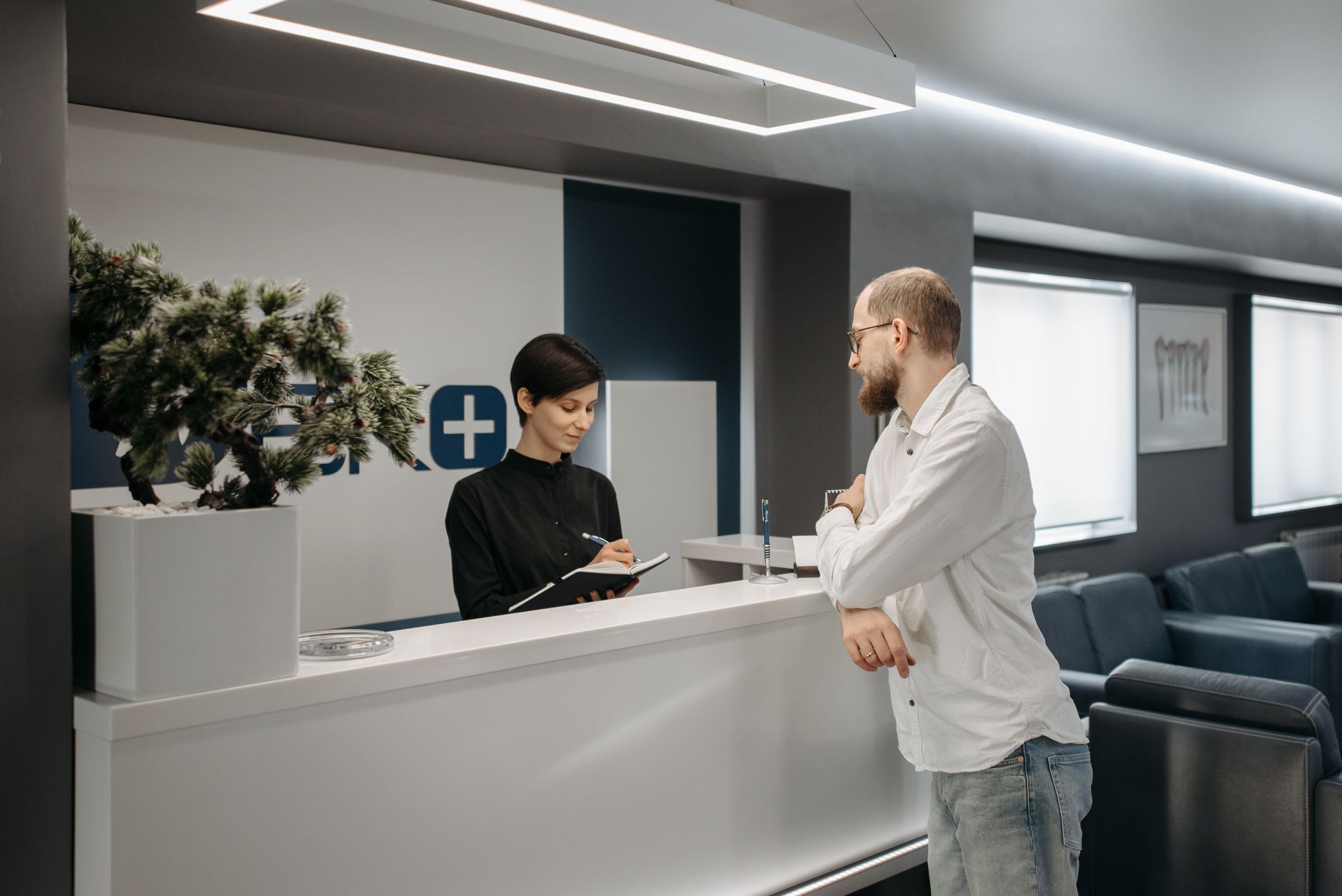
Receptionist writing in a paper appointment book while helping a patient at the clinic's front desk
A paper schedule and a ringing phone: the point where a small clinic loses patients.
1The message arrivesat any hour, on the clinic's number
2Emergencies firstjumps the line, before any talk of times
3Triagethe right specialty, from what the patient describes
4A slot that existsin the clinician's real schedule
5Intake form firstpre-visit intake, not a medical history
6The visit starts on topicthe clinician already knows the reason

See the whole journey, with what happens at each step

Absolute limits

What the assistant never does — no matter how hard someone pushes.

This is not a recommendation written into its instructions. It is the design: it does not have the tools to do any of this, and the rule holds even when the patient asks point-blank.

Never says what the person has

Not as a hypothesis, not as “it could be”. It listens to the account, records it and routes it.

Never recommends medication

Over-the-counter drugs included. No dose, no dosing schedule, no “a painkiller will help”.

Never interprets test results

It can say the result will be reviewed at the visit. Reading a report is the clinician's act.

The six limits, and the requirement of the resolution behind each one  ·  What the copilot points out during the visit

The note

Between what the machine writes and what counts as a document, there is a person.

The visit is transcribed and the note is born a draft. It waits in a visible queue for the clinician who saw the patient. Until someone releases it, it is not a document — and the whole site uses this convention: dashed is draft, solid is signed.

Draft 2:32 p.m.

Patient reports low back pain for about two weeks, worse at the end of the day. Denies trauma. Reports partial relief with rest.

Mentions ongoing use of an antihypertensive.

Written by the assistant from the visit. Not a document yet.

Released 2:41 p.m.

Patient reports low back pain for about two weeks, worse at the end of the day. Denies trauma. Reports partial relief with rest.

Mentions ongoing use of an antihypertensive.

Reviewed and released by the treating clinician. From here on, it is part of the medical record.

While it is a draft, the text is not part of the medical record. See the visit's audit trail, hour by hour — it is what answers “who decided what”.

Nobody turns everything on

Start with the piece that hurts, and leave the rest off.

Whatever you don't turn on simply doesn't exist in your account. Three possible setups, to show that the whole machine is not mandatory — and that the most valuable piece changes from clinic to clinic.

Three possible setups. They are illustrative, built from what the product delivers — they are not customers. Swipe the table sideways to see all three columns.

Piece Solo
practice
Clinic with four
specialties
Clinic with
telehealth
WhatsApp front deskononon
Triage by specialtyoffonon
Schedule per clinicianononon
Pre-visit intake formoffonoff
Written visit noteonoffon
Telehealth with a video roomoffoffon

Create the account and watch the assistant answer your number.

Nothing to install, no need to replace the clinic's system, no contract commitment.

The patient journey

From “good morning, are you open?” to a booked visit.

Most messages arrive when there is no one at the front desk. It isn't a problem of effort: it's a problem of hours.

A clinic's twenty-four hours A twenty-four-hour band. Between 8 a.m. and 6 p.m., a shaded area marks the hours the front desk is staffed. Each incoming message is a dot: those inside business hours are filled, and those outside — most of them, concentrated at night — are hollow red circles. Below, a solid line runs across all twenty-four hours, marking the assistant's coverage. front desk is open 8 a.m. to 6 p.m. 12am8am 12pm6pm 9pm12am the 10 p.m. message the assistant answers around the clock and the front desk goes back to the people at the counter
step 1

The message arrives

On the clinic's WhatsApp, at whatever time suits the person. The assistant answers right away, using the clinic's own material — what the clinic treats, where it is, which insurance plans it accepts.

step 2

Emergencies come firstinterrupts everything

Before any conversation about times, the message is read for signs of an emergency. If there are any, the guidance is to seek immediate care — and the assistant does not keep negotiating the schedule. It does not assess severity and never says it isn't serious.

step 3

Triage picks the area

Based on what the person described, the conversation goes to the right specialty among those the clinic offers. That avoids the question the front desk can't answer — “which doctor should I book with?” — and the visit wasted with the wrong clinician.

step 4

Slots that exist

The assistant checks that clinician's real schedule and offers what is open. There is no “let me check and get back to you”: the slot offered is a slot that can be booked, and on confirmation the appointment is created.

step 5

The pre-visit intake form

Before the visit, the person receives a short form to explain the reason calmly. It is a pre-visit intake form, not a medical history: taking the history is a medical act and happens after the visit, with the clinician.

step 6

The clinician already knows

The clinician opens the schedule and finds the reason for contact and the patient's answers on the form. The visit starts on the topic, not on data collection.

Doctor filling in a patient's form by hand, with the clipboard on the desk between them
On the other side of the six steps is an ordinary visit — which is exactly the point.
One door, many destinations

Everyone writes to the same number. That alone is nobody's problem.

Patients don't know — and shouldn't have to know — which specialty handles their case. Triage figures that out from what they said. And before all of that comes a fork that can't wait.

A message that branches out to the right specialty A single stroke leaves a phone. Before any branching, a thick red branch rises and ends in seek immediate care. The main stroke continues and opens into four thin branches, each ending in one of the clinic's specialties, and at each tip a small clock indicates its own schedule. one message on the clinic's number seek immediate care before any talk of times — and without assessing severity internal medicine pediatrics orthopedics dermatology and whatever else the clinic offers own schedule own schedule own schedule own schedule

Swipe the drawing sideways to see all of it.

The emergency check happens before any conversation about times. It does not assess severity or rule out risk: when there is a sign, the assistant tells the person to seek immediate care and stops negotiating the schedule.

What the front desk stops doing

Repeating the address, insurance plans and hours no longer ties up the desk.

Most of what reaches a clinic's WhatsApp is the same question in a different order: do you take this insurance, where are you, do you have a slot on Thursday, do I need a referral. None of it requires judgment — it requires the right information, available on the spot.

The front desk is still the front desk: it takes care of the person in front of it, not the phone buzzing while it's helping someone.

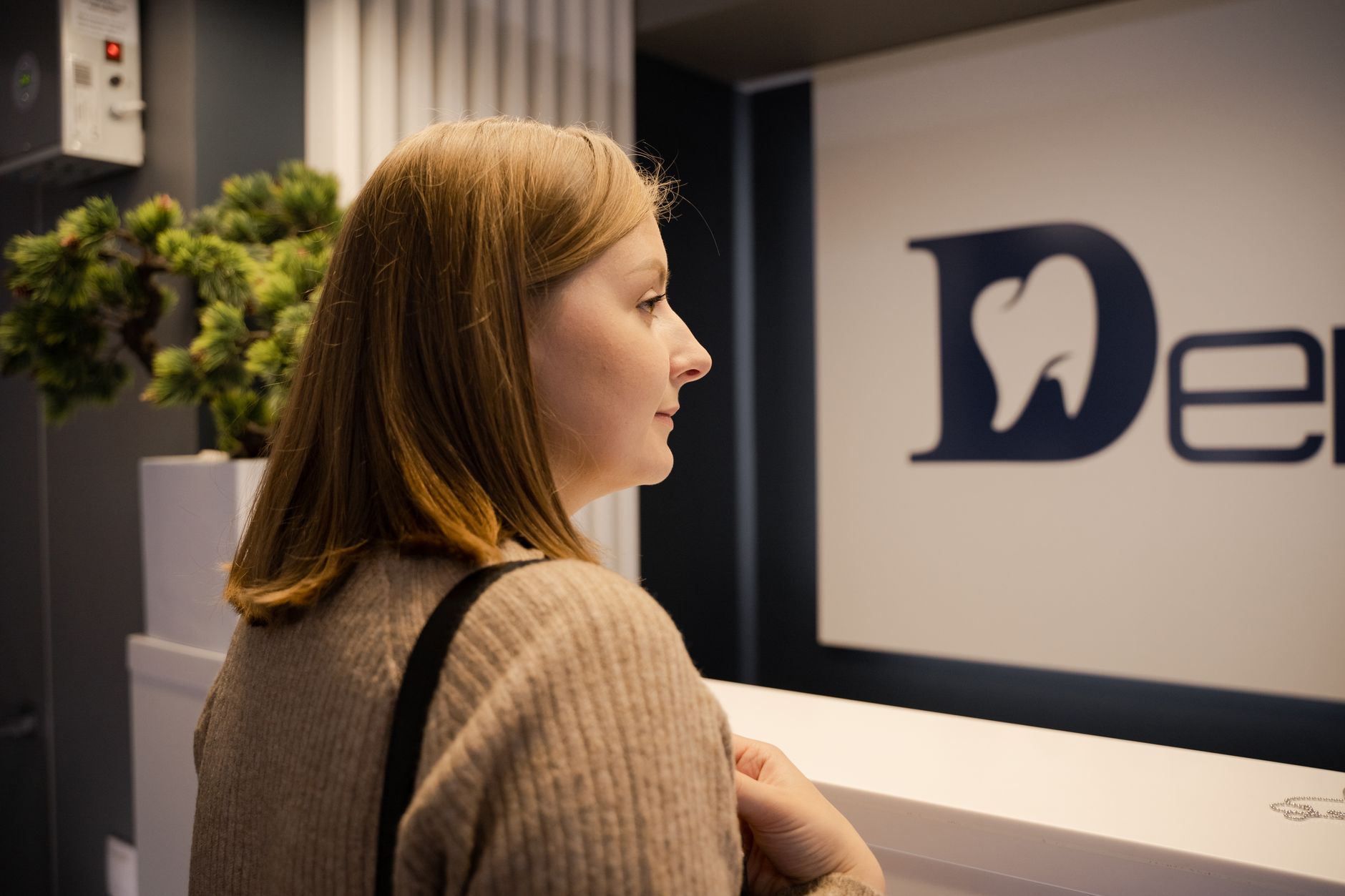
Patient waiting to be seen in a clinic's reception area, seen in profile
The person at the counter loses attention every time the phone rings.
When the visit is by video

The room is created on the spot, and the link is never made up.

If the visit is a telehealth appointment, the assistant creates the room when it confirms and sends the link for that specific visit. It does not adapt an old link or reuse one from another appointment — a plausible but invalid link is only discovered at the appointment time, with the patient waiting alone.

And a telehealth confirmation carries no address and no “please arrive early”: there is nowhere to arrive.

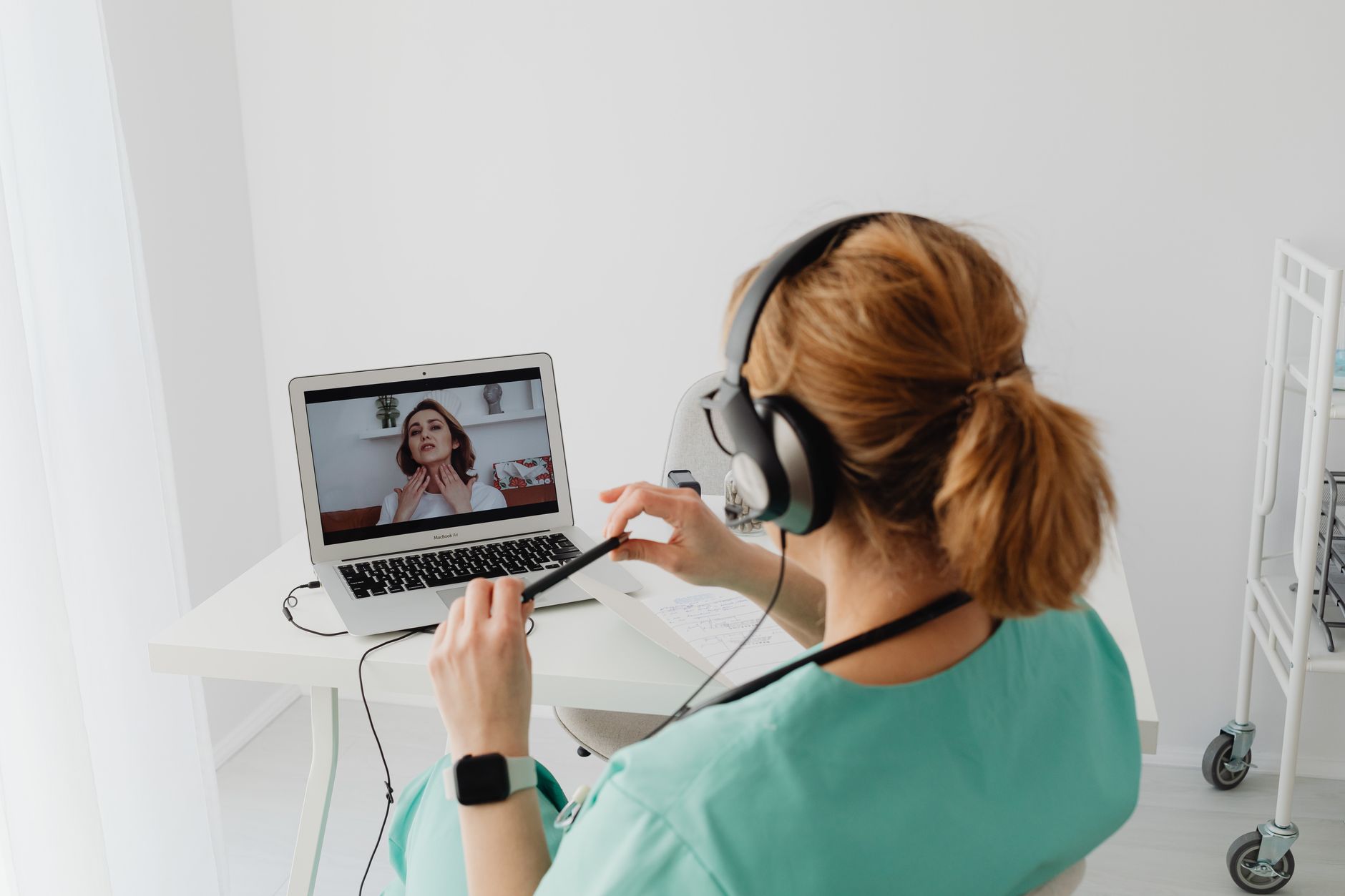
Health professional conducting a video visit on a laptop in the office
Telehealth uses the same schedule and the same visit note as an in-person visit.

The next step is seeing this on your own number.

The medical record

What the visit becomes, and who signs it.

Three documents, three different requirements, and none of them becomes part of the medical record without passing through a person.

who said what

Transcript

A transcription of what was said, with each line attributed to its speaker. It goes through no artificial intelligence at all — it is the raw text, and it exists so the other two have a basis.

signature pending

Medical history

Written from the visit, and only from what the person actually said. It is created after the visit because taking the history is a medical act — what is collected beforehand is the pre-visit intake form.

signed CRM

Prescription

Drafted from what the clinician indicated during the visit. The assistant organizes the text; the treatment decision belongs to the clinician who saw the patient, and so does the release.

Why three, not one

Because what the patient reported and what the clinician decided cannot blur together on paper.

Putting everything in one text looks practical until the day someone needs to tell what the patient said from what the clinician decided. Kept apart from the start, that never becomes an argument.

Who said what stays distinguishable

In a single text, “the patient reports pain” and “rest was recommended” become the same prose. Kept apart from the start, the report stays a report and the decision stays a decision — and nobody has to reconstruct it from memory months later.

It also changes who may do what: a transcription error in the report is fixed by editing; a treatment decision can only be changed by the clinician. They are documents with different owners and different requirements.

Top-down view of a doctor's desk with handwritten notes, a laptop and a coffee
Reviewing takes less time than writing from scratch — and it is the review that the resolution requires on record.
The cycle

From the end of the visit to the archive, with a person in the middle.

Dashed is what the machine produced and does not count yet. Solid is what has passed through a person. The document changes its stroke at a single point — and it is always the same point.

From draft to medical record, with a person in the middle On the left, a sheet with pencil scribbles and the label draft, under a dashed line that reads not valid as a document. In the center, a pen pointing right, captioned the treating clinician reviews and releases. On the right, the same sheet with the text in ink, a signature and a released stamp, under a solid line that reads valid. not valid as a document valid draft in the queue, waiting the treating clinician reviews and releases the system refuses any other clinician CRM RELEASED medical record

Swipe the drawing sideways to see all of it.

in pencil: what the machine wrote in ink: what a person signed
The queue

A draft that sits still is a draft you can see.

The release queue stays in view of whoever has to release, showing how many documents are waiting and for how long. That is not dashboard decoration: a queue no one sees becomes a graveyard, and a late medical record is the worst place to let things pile up.

Each clinician sees their own queue. What they haven't released doesn't count as a record, and the system won't let anyone else release it for them.

Health professional reviewing records with a patient sitting beside them
Reviewing takes less time than writing from scratch — and it is the review that the resolution requires on record.
The audit trail

Who decided what, and based on what.

The CFM resolution turned the medical record into a risk-management tool: it must make it possible to reconstruct later which tool was used, for what, and that there was human review. The audit trail is what does that — and it is what protects the clinician.

The audit trail of a visit, hour by hour A timeline with a scale break. On the left, at 9:12 a.m. the appointment is confirmed and at 10:04 a.m. the patient fills in the form. After the break, at 2:07 p.m. the visit starts; between 2:31 and 2:33 p.m. the machine transcribes and drafts, in a stretch marked as dashed; at 2:41 p.m. the treating clinician reviews and releases, and that mark is the only solid, tall one, labeled as the one act that cannot be delegated. 9am 10am 2:00pm 2:20pm 2:40pm scale break appointment confirmed 9:12am · via the clinician's schedule intake form completed 10:04am · by the patient visit started 2:07pm · in person the machine writes 2:31pm transcript, no interpretation 2:32pm medical history drafted 2:33pm prescription drafted CRM 2:41pm · released by the treating clinician, with 2 passages edited the one act that cannot be delegated

Swipe the drawing sideways to see all of it.

This reconstruction — which tool was involved, for what, and that there was human review — is what the resolution requires of the medical record. And it is what supports the “diligent use” on which the clinician's protection depends.

Opening the record

A record nobody can open protects nobody.

A medical record that is stored but can't be consulted is paper at the back of a drawer. You open a patient and see their history at this clinic — visit by visit, with who saw them and what was signed.

What you see when you open it

The date of the visit, the name and medical board registration of the clinician who saw the patient, and the documents released at that visit. Drafts are left out: until someone signs, it isn't a record — it's a queue.

A visit that happened with no author on record still shows up, and says so. Hiding it would leave a silent gap in the history, and a silent gap is worse than a declared one.

And the audit trail comes with it

On each document: when it was released, and how many passages you changed from what the machine had written. “Released without changes” is also an answer — and it is different from not knowing.

Health professional at the office computer, looking up a patient's record
The person's history at this clinic, before they sit down — not afterwards, from memory.
Why this is yours, not the clinic's

Responsibility for the act cannot be delegated. What you can do is prove how you exercised it.

CFM Resolution 2,454/2026 turned the medical record into a risk-management tool: it must make it possible to reconstruct later which tool was involved, for what, and that there was human review. The one who answers for that is the one who signed.

Review is proven, not claimed

There is a difference between rubber-stamping what the artificial intelligence wrote and reviewing it — and that difference used to be recorded nowhere. Now it is: the text the machine produced is kept, and what you changed is counted.

Nobody signs in your place

Another clinician at the same clinic cannot release the document from your visit — the system refuses. And the front desk, which organizes the queue and can see that the document exists, whose it is and when it was created, cannot read the clinical content.

What belongs to one clinic stays there

You see patients in more than one place with a single login, and the record does not cross the door: custody belongs to the facility where the visit took place. What you recorded there does not show up here — and that is how it should be.

None of this is dashboard decoration. It is the difference between saying there was human review and being able to show what it was.

The one who signs is always the one who saw the patient.

Another clinician at the same clinic cannot release the document from a visit that wasn't theirs. It isn't a usage policy: the system refuses.

The video visit

You walk into the room already knowing who is on the other side.

The pre-visit intake form and what was recorded at previous visits at this clinic come into the room with you. And while the conversation goes on, the copilot points out what was left half-done — without ever suggesting a diagnosis, a medication or a dose.

Health professional in a white coat during a video visit, in the office Dr. Helena · you
Older patient at home, joining the visit on a tablet Antônio R. RECORDING

Who is in the room

Reason: low back pain for 2 weeks, worse at the end of the day

Intake form: denies trauma; has already tried rest

Current meds: ongoing antihypertensive

At this clinic: 2 previous visits

Suggested question

The intake form mentions ongoing use of an antihypertensive, and that hasn't come up in the conversation yet.

Reported sign

He mentioned tingling in his leg early on and the conversation moved on without coming back to it.

No next step agreed

You talked about an imaging test, but nothing was settled about when or where.

Staged screen with fictional data. What it shows is real; the patient is made up.

The three workflows, from the inside

Nobody presses anything. The call simply ended.

Each one is a switch, and all three start off: the clinic turns on what it uses, and the cost stays proportional.

The four workflows the visit triggers From a single moment, the end of the call, three parallel tracks start: transcript, medical history and prescription. The transcript track is solid because it uses no artificial intelligence; the other two are dashed because they end in a draft. All three run into a vertical barrier labeled the treating clinician signs, and only after it does the fourth track begin, solid, archiving with an audit trail and delivering what can be delivered. the call ended nobody pressed anything Transcript transcribes · archives · moves the pipeline no AI model at all Medical history affiliation · transcript · scribe Prescription affiliation · transcript · scribe both start as drafts treating clinician signs — and only for their own visit the barrier no workflow crosses on its own Document released archives with audit trail · delivers what can be delivered record archived

Swipe the drawing sideways to see all of it.

the call ended

Visit transcript

The raw text, filed in the archive. It is the basis for the other two.

no artificial intelligence at all
  1. transcriptfetches the call's transcript, with the role of each speaker
  2. archivesaves it to the archive with time, duration, who saw the patient and the recording reference
  3. pipelinemoves the patient to Seen — which is what answers “how many showed up this month?”
the call ended

Medical history

What the patient reported, in the order of a clinical text.

  1. affiliationfinds out which clinic the visit belongs to — the record does not cross the door
  2. transcriptthe same basis, with no reprocessing
  3. scribewrites only what was said; anything not said becomes “not reported”, not an assumption
  4. draftsaved awaiting release, and added to the treating clinician's queue
the call ended

Prescription

What the clinician indicated. Same discipline, different document — which is why there are two workflows.

  1. affiliationsame clinic resolution
  2. transcriptsame basis
  3. scribenever corrects a dose: it writes what was heard and flags (verify) if it was ambiguous
  4. draftalso waits for a signature
someone released the document

Document released

This one doesn't fire when the call ends: it fires when a person signs.

  1. archivestores it with the audit trail: who wrote it, who reviewed it, how many passages changed
  2. deliversends the patient only what can be delivered — the care instructions go out; the medical history is an internal record, and the signed prescription is issued by the clinic

The costliest mistake in this work is attributing to the clinician something the patient said. That is why the transcript carries the role of each speaker, and the scribe separates the two before writing a single line.

Three kinds of suggestion

It points out what was missed. Never what to do.

Three, and none of them is a clinical decision. The difference is not one of tone, it is one of category: it has no way to issue a treatment suggestion.

Suggested question

What the intake form brought up and the conversation didn't touch, or the detail that is usually missing in that specialty: how long it has been going on, what has been tried, allergies, current medications.

SUGGESTED QUESTION“The intake form mentions ongoing use of an antihypertensive, and that hasn't come up in the conversation yet.”
Reported sign not addressed

Something the person said that the conversation let slip. It does not assess severity or say what it means — it says it was left behind.

REPORTED SIGN“He mentioned tingling in his leg early on and the conversation moved on without coming back to it.”
Agreed with no next step

A test, follow-up or referral that was mentioned and left hanging. It is what most often goes missing between one visit and the next.

NO NEXT STEP AGREED“You talked about an imaging test, but nothing was settled about when or where.”
What is left after the visit

The same visit, measured both ways.

What changes is not the visit — it is what is left of it. On the left, the path almost every small clinic follows today.

How it is today

  1. The visit ends and the next patient comes in
  2. At the end of the day, someone sits down to write
  3. Writes from memory, for six patients
  4. Digs through paper for what was agreed
  5. What they don't remember doesn't go in
  6. The pipeline is only updated when someone remembers
at the end of the day · from memory · and nobody will know what was missing

With the assistant

  1. You hang up the call
  2. The transcript is already done, separated by speaker
  3. Medical history and prescription start as drafts
  4. All three wait in your queue, in plain view
  5. You read, adjust what's needed and release
  6. It becomes part of the medical record, archived with its audit trail
while the next visit begins · from what was said · and the queue shows what is still waiting
Where the time shows up

Four places, and none of them is “typing less”.

Saving keystrokes is the argument everyone uses, and it is the smallest of all. What changes a clinic's week is somewhere else.

The record no longer depends on memory

What gets written from memory, for six patients, is not what was said — it is what was left. And the record is what protects the clinician later.

The queue stops being invisible

A document stalled without anyone knowing is the worst kind of backlog. Here it shows up, along with whose it is.

The pipeline moves without anyone dragging anything

Booked, intake completed, seen, no-show — without anyone writing anything down.

The audit trail exists before you need it

Nobody builds an audit trail after the problem. It counts because it was recorded when nothing was happening — and because you can open it the day you need it, patient by patient.

And what can't be delivered

The patient gets the care instructions. Not the medical record.

The medical history is the clinic's internal record: it exists for care and for the clinician's defense, not to circulate. What goes out on its own, once someone releases it, is the visit's care instructions — what was agreed, in the hands of the person who was seen. The signed prescription is still issued by the clinic: a prescription is only valid with the clinician's signature, and nothing here signs on their behalf.

See the visit's audit trail, hour by hour

Doctor showing a patient a test result on a tablet, in the office
The same room serves the video visit and the recorded in-person visit — what changes is who is on the other side.
What it doesn't do

Silence is the right answer when the visit is flowing.

An unnecessary alert in the middle of a visit costs two things: the clinician's attention and their trust in the tool. The second time it gets in the way, nobody reads it anymore.

Never suggests a hypothesis, medication or dose

Not even if the clinician asks directly. Clinical decisions belong to the doctor, and the CFM resolution does not allow them to be delegated.

Never talks to the patient

Suggestions appear only to the person leading the visit. The patient sees none of it.

Never repeats what the conversation already settled

If the point was covered, it stays quiet. That is the difference between a copilot and an alarm.

The room link is never made up.

When the visit is by video, the room is created at confirmation time and that visit's link goes in the message. No adapted old link — a plausible but invalid link is only discovered at the appointment time, with the patient waiting alone.

Channels and routines

Four doors for conversation. And the work that goes through no door at all.

It is the same brain behind all four — same triage, same schedule, same clinic material. But if the clinic only looks at conversations, it will see less than half of what is running.

Above the counter, four doors. Below it, what runs with nobody there On the top half, four exam-room doors with a person at each one, labeled WhatsApp, website or kiosk, video room and the front desk — this is what you see. A solid horizontal line separates the two halves. On the bottom half, which is larger, six objects linked by a dashed line: the intake form, the transcript, the drafts, the queue, the archived folder and the pipeline, all labeled as what happens without anyone asking. what you see WhatsApp Website or kiosk Video room The front desk the counter above this line, someone arrived and what runs with the clinic closed nobody asked for any of this — the visit simply happened the intake form, the day before the transcript the two drafts the release queue the archive with its trail the pipeline moving and none of these six is a conversation

Swipe the drawing sideways to see all of it.

The doors

Where patients find the clinic.

The only thing that changes between them is the place. Triage by specialty, the real schedule and the limits on what the assistant may say are exactly the same — because it is literally the same agent behind all four.

Four doors for conversation, one agent behind them On the left, four objects: a phone, a browser window, a video camera and a reception counter. An ink stroke leaves each one, and the four converge on a sheet in the center labeled the same agent. A single stroke runs from it to the clinic's patient file folder, on the right. WhatsApp Website or kiosk Video room The counter the same agent same triage · same schedule · same limits The clinic's patient file one patient, one history — whichever door they come through what changes between the four is the PLACE

Swipe the drawing sideways to see all of it.

The clinic's WhatsApp

Where the conversation already happens. It is the busiest door, and the one that gets the most messages after hours.

same brain
The clinic's website, or a kiosk at reception

The same conversation inside a web page. It works for people who'd rather not call, and for people already waiting at the counter.

same brain
Video room

Telehealth, with the room created on the spot and the patient's context coming in with you.

with copilot
The team board

Where clinicians see the schedule, the patients, the queue of documents awaiting release — and each patient's record at this location.

team only

A patient can start on WhatsApp, be seen in the video room and come back through the website: it is the same patient file, and they don't repeat their story.

And what runs through no door at all

Nobody asked for any of this. It happened because the visit happened.

This is the part nobody sees and nobody buys in a demo — and it is where most of the time the clinic gets back comes from. None of these lines was triggered by someone clicking on something.

The pre-visit intake form is sent

A few hours before the visit, timed from the appointment. Whoever fills it in arrives with the reason already explained.

triggered by the booking, not by a person
The transcript is made, separated by speaker

No artificial intelligence at all in the raw record: it is the text of what was said, with the role of each speaker.

triggered by the end of the call
The medical history and prescription start as drafts

Written from what was said — the patient's report on one side, the clinician's decision on the other, never mixed.

two separate workflows, each its own switch
The queue stays visible to whoever must sign

Showing how many documents are waiting and for how long. A queue no one sees becomes a graveyard, and a late medical record is the worst place to let things pile up.

each clinician sees their own
The document is archived with its audit trail

Who wrote it, who reviewed it, how many passages changed and who released it. And only what can be delivered reaches the patient.

triggered by the signature
The pipeline moves on its own

Contact, visit booked, intake completed, seen, no-show. Nobody needs to drag a single card for the clinic to know how many booked and how many showed up.

and that is what answers “how many no-shows this month?”
Why this matters to the bottom line

Chat is the visible part. It isn't the big part.

A clinic that only turned on the WhatsApp front desk would already save the receptionists' hours. But a clinic that stops there is still writing records from memory at the end of the day, still finding out next month how many patients didn't show, and still has documents stalled without anyone knowing.

The question that separates the two is not “how many messages does it answer?”. It is what happens after the conversation ends.

See the document's cycle, from the end of the visit to the archive

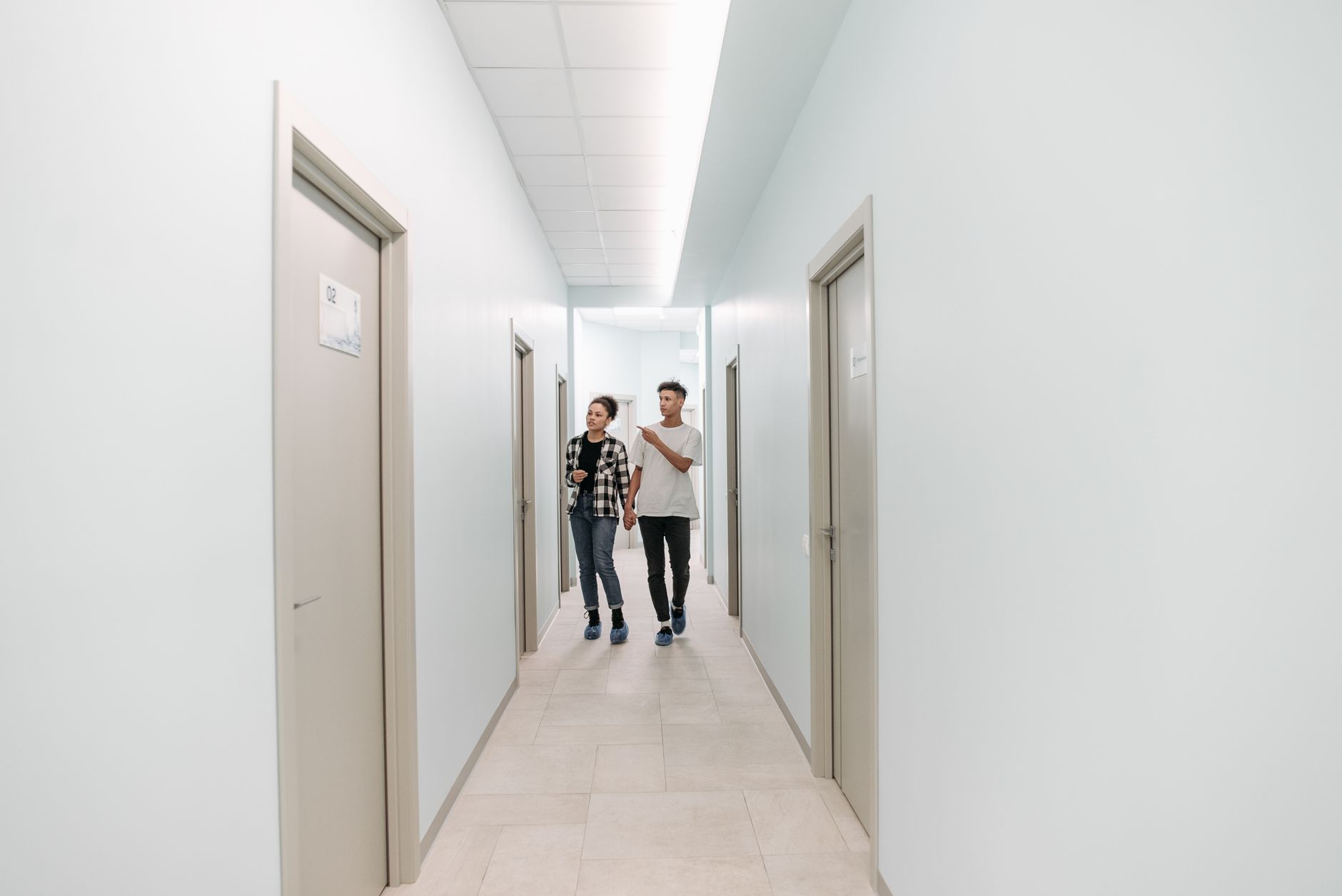
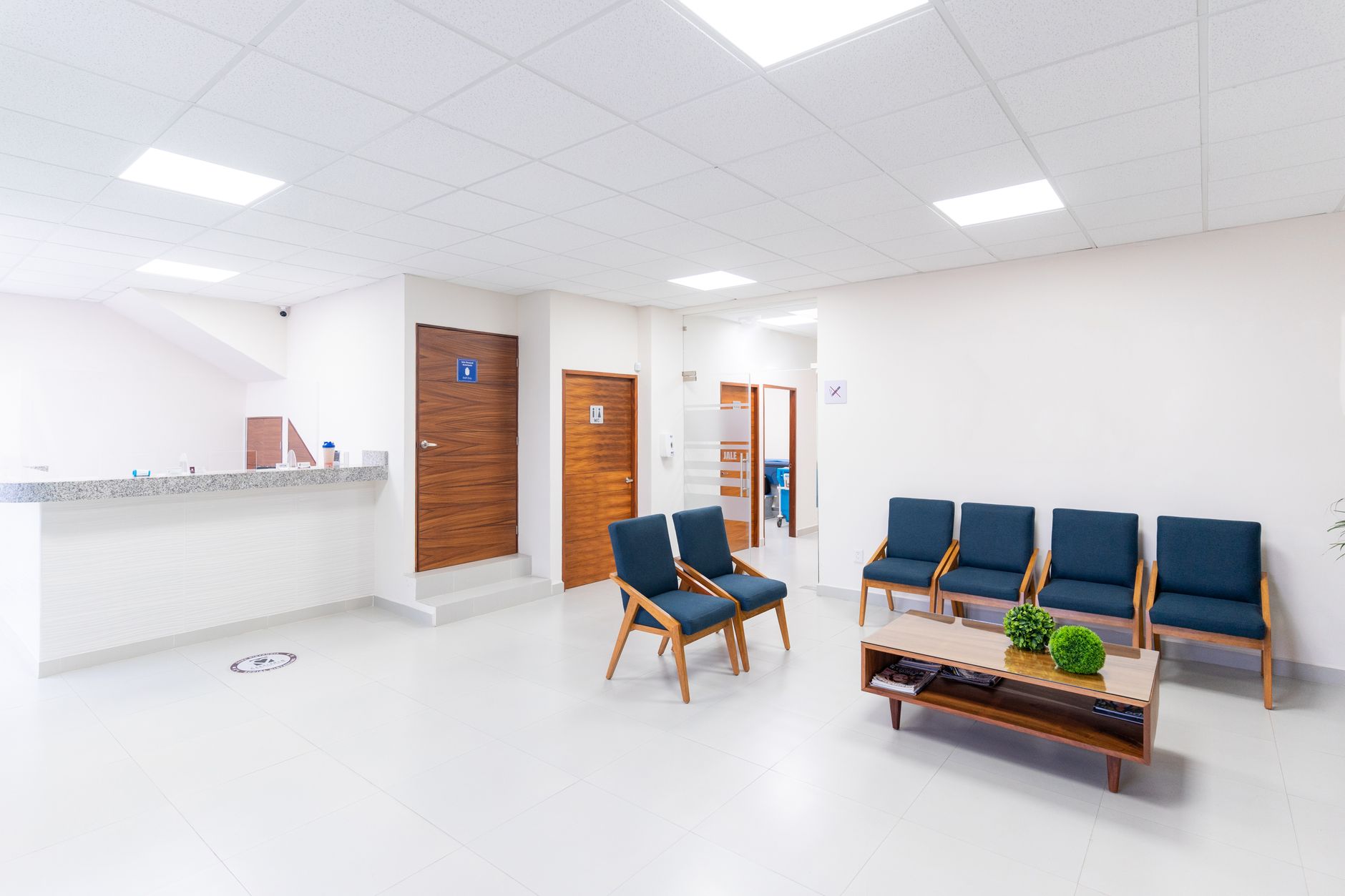
Bright clinic hallway with several exam-room doors
Between one visit and the next, the clinic keeps working — and that is usually where it loses.

Start with one door. Turn on the routines when it makes sense.

Each piece is a switch, and whatever you don't turn on doesn't exist in your account.

Doctors and front desk

One doctor works at three clinics. One login.

Neither “a clinic has doctors” nor “a doctor has clinics” describes this without duplicating someone. They are two separate things and an affiliation between them — and it is the affiliation that carries the schedule.

Custody of the medical record belongs to the facility, not the clinician: the clinic is answerable for it, and it is the clinic's number the patient knows. An independent practitioner is no exception — they are a clinic of one, with the same structure and without the steps that only make sense with a team.

What changes from place to place is the affiliation: the same person has different hours at each address where they practice, and what answers “when does she see patients here?” is the person-clinic pair, never either one alone.

Two entities and an affiliation

The clinic doesn't contain the doctor, and the doctor doesn't contain the clinic.

Either design forces you to duplicate someone: the same person becomes three profiles, or the same clinic shows up in three places. What solves it is recognizing that the schedule belongs to neither — it belongs to where the two meet.

One clinician, three practices, one login On the left, the figure of a clinician captioned one login, always. Three threads run from her to three exam-room doors, each with the clinic's sign and the days she practices there. Inside each door is a medical record folder, and between the doors a sign shows that one clinic's records do not reach the other. the same person one login, always Clinic A Mon and Wed, mornings records for this location Clinic B Tue, afternoons Own practice Friday, all day a clinic of one the record does not cross over seeing patients at A doesn't open B's records — not even for her the schedule lives in the affiliation not in the person, not in the clinic: it is the pair that answers “when does she see patients here?”

Swipe the drawing sideways to see all of it.

The one almost nobody considers

The receptionist is a role, not a lesser level of access.

She is the one who uses the system all day, and she is the one who abandons the tool if it treats her like a visitor. That is why she has what she needs to do a good job at the counter: the schedule, the patients, what is booked and what changed.

What isn't hers is the clinical content and the release of documents — not because of hierarchy, but because the one who answers for the act is the one who saw the patient.

Health professional reviewing documents at her own desk, with a stethoscope beside her
Hers are the schedule and the counter. The clinical content and the signature stay with the clinician who saw the patient.

Your team joins by invitation, each with their own role.

Confidentiality, LGPD and CFM

Responsibility can't be delegated.

Since February 27, 2026, a resolution of the CFM (Brazil's Federal Council of Medicine) spells out what artificial intelligence may not do in medicine. It is not a footnote detail: it is the design of this product, item by item — and that is why this is the most concrete page on the site.

CFM 2,454 2026 IN FORCE
What the resolution requires × what the product does

Every requirement has a place in the system, not a promise in the contract.

The resolution

Delegating to artificial intelligence the communication of a diagnosis, prognosis or treatment decision is prohibited.

In the product

The assistant doesn't give a diagnosis, not even as a hypothesis, doesn't recommend medication — over-the-counter included — and doesn't interpret test results. The restriction lies in what it is able to do, not in a request written in its prompt.

The resolution

The final word on diagnostic, therapeutic and prognostic decisions always belongs to the physician, and using the tool does not relieve them of responsibility.

In the product

Every document is born a draft and waits for release. And only the clinician who led the visit can release its documents: another clinician at the same clinic is refused by the system.

The resolution

The medical record must record the tool used, the purpose of its use and the human review of its suggestion — so that who decided what can be reconstructed later.

In the product

The audit trail records each step with a timestamp: what the assistant wrote, that it was left waiting, that it was reviewed, how many passages changed and who released it. That trail is what supports the “diligent use” on which the clinician's protection depends.

The resolution

Patients have the right to be informed, clearly and accessibly, whenever artificial intelligence is used.

In the product

The conversation never pretends to be a person, and the record that the interaction went through the assistant stays in the visit's audit trail.

LGPD, Article 11

Health data is sensitive data, and the minimum is the rule.

Under the LGPD — Brazil's General Data Protection Law — the assistant asks only for what it needs to guide and book. Never a CPF (Brazilian taxpayer ID), ID card, credit card, password, full insurance member number or a photo of a document. It isn't conservatism: it is what the law classifies as sensitive, and whatever is left stored is what can leak.

The data lives on our own infrastructure, in Brazil, with each clinic's content isolated from the others — and the material the clinic uploads is consulted at answer time, without feeding any model training.

Doctor talking with a mother and her son in the office, with a clipboard on the desk
What is asked for is the minimum needed to guide and book. The rest is discussed here.
How the patient leaves the conversation

Welcomed, routed, and without a single clinical statement.

A refusal is never an “I can't help you”. The assistant records the account, routes it to someone who can answer and steers toward the visit — which is where the question will really be answered.

Never makes up data it hasn't confirmed

A slot it didn't check, an insurance plan that isn't on the list, the name of a clinician who doesn't practice there. If it doesn't have the answer, it says it will confirm.

Never states insurance coverage or waiting periods

That is up to the insurer. It says what the clinic accepts and offers the alternative.

Never exposes technical detail to the patient

No error codes, no system names, no failure notices. If something doesn't work, it takes another route and logs it for the team.

Never names third-party software

Guessing which system the clinic uses signals an assumption, and guessing wrong signals carelessness.

Compliance is the design, not the paperwork.

If the line between what the machine does and what the person signs is in the right place, the rest follows.

For whoever signs

The clinic's biggest cost has no invoice.

It isn't booked as an expense, it doesn't appear in the report and it isn't discussed in meetings. It is the gap between the schedule you booked and the schedule that actually happened — and it disappears from revenue without a trace.

The math, with your numbers

Redo it with what you bill. It takes a minute.

The percentages are industry figures and are on the home page, with sources. The rest is arithmetic.

1

How many appointments do you book per month?

In the example below, 300 — a clinic with four or five clinicians.

2

What is an appointment worth, on average?

In the example, R$ 200. This is the only number that doesn't come from research — it is illustrative, and it is the first one you replace.

3

Multiply by the industry no-show range

A clinic with no active confirmation process sits between 20% and 30%. In the example, 20% of 300 appointments at R$ 200 comes to R$ 12,000 a month that the schedule promised and the till never saw.

And that is only the half you can see. The other half is the message that arrived at 10 p.m. and got answered at 8 the next morning — when the person had already booked somewhere else. That one doesn't become a no-show: it never becomes an appointment, so it never shows up in any statistic.

What to compare it with

This is not the clinic's management system. It is who answers when nobody is there.

The most common price comparison is with practice management software, and it leads to the wrong conclusion — because management software waits for someone to type. This assistant is what happens when there is no one.

The management system

Stores the schedule, records and finances. It does all of that very well, and answers no one: someone on your team has to sit in front of it. You still need it — and you don't have to replace it.

The front desk

Answers, triages, books, confirms and reminds. That is exactly what the assistant does — only also at 10 p.m., on Sundays and on holidays, which is when a good share of the messages arrive.

The scribe

Transcribing the visit and drafting the note is the expensive part, because it costs something on every visit. That is why it is a separate switch: if all you want is a full schedule, you don't pay for it.

How pricing works

By usage, and the unit is the visit that actually happened.

Not per registered clinician. A doctor who saw no patients that month doesn't count, and a clinic that saw more pays proportionally more — not least because it gave the system more work.

The unit is the recorded visit, chosen for a practical reason: it is the one thing here you already count every day, and it is the same unit you already use to think about your own revenue. No messages, audio minutes or credits — three units nobody knows how to translate into money.

The higher the volume, the lower the price per visit. The figure comes out of a conversation, once we know what you'll turn on — because a number in isolation, without knowing which pieces you want, misleads in both directions.

Where to start

With the smallest setup that plugs the leak.

The first step is just the front door: answer, triage, book, confirm and remind. No visit notes, no transcription, no medical record. It is the step that goes after the empty chair, which is the cost behind the numbers above — and it is the cheapest precisely because it leaves out the expensive piece.

The note comes in when you want it, and not before. Turning something off uninstalls nothing: whatever you don't turn on doesn't exist in your account, and whatever has already been written remains yours, in a format you can take with you.

If the clinic prefers its own server and brand, that exists and costs more — and it has a consequence we'd rather tell you before selling. It's explained here.

Before you decide

The three questions that stall any purchase.

How much does it cost?

By usage, not by seat — you don't pay for a registered doctor who saw no patients. The figure comes out of a conversation, once we know what you'll turn on.

How long until it's live?

The account is created in minutes. What determines the rest is how much of the clinic's material is already organized: insurance plans, hours, who sees what.

What if it doesn't work?

Turn on one piece, see the effect, and only then turn on the next — the minimum-dose logic applies here too. Start with the front desk alone, with no notes at all. And turning something off uninstalls nothing: whatever you don't turn on doesn't exist in your account, and whatever has already been written remains yours, in a format you can take with you.

The first math that works out is the empty chair.

It doesn't need a system change, staff training or convincing anyone to type more. It needs someone answering when nobody is there.

Where this runs

At our place, or at yours.

The product is the same. What changes is whose address it is — and the choice has a consequence we'd rather tell you before selling, not after.

Two ways to have this

At our place, or at yours.

The product is the same. What changes is whose address it is — and the choice has a consequence we'd rather tell you up front.

On the shared platform

the usual path
  • The account is created on the spot, with nothing to install
  • One login for the clinician, at every clinic where they practice
  • Each clinic's content isolated from the others
  • Improvements arrive on their own, with no update window
  • Usage-based pricing

As a dedicated install

your brand, your address
  • Your domain and your identity — patients see the clinic, not us
  • A server and database all your own, with no neighbors
  • You decide when to update
  • It is an island: anyone who also practices at a clinic on the shared platform will have two logins
  • It costs more, because it is per-customer infrastructure and operations, not software

There is no expensive wrong choice: starting on the shared platform and migrating later is a planned path, and the visit records come along.

When in doubt, start on the shared platform.

It is the fastest way to see the assistant answering your number, and migrating later is planned for — the visit records come along.

Before you sign up

What people ask before signing.

The twelve that come up most, answered straight — including the ones that don't work in our favor.

Frequently asked questions

What people ask before signing.

Can the assistant diagnose or recommend medication?

No, and that isn't a setting. It doesn't diagnose, not even as a hypothesis, doesn't recommend medication — over-the-counter drugs included — and doesn't interpret test results. CFM Resolution 2,454/2026 (from Brazil's Federal Council of Medicine) prohibits delegating those communications to artificial intelligence, and the product was built inside that line.

Who signs what the artificial intelligence wrote?

The clinician who saw the patient. The note is born a draft and sits in a queue until a person reviews and releases it. On top of that, only the clinician who led that visit can release its documents — another clinician at the same clinic can't.

Once I release it, can I look it up again?

Yes. You open the patient and see their history at this clinic: visit by visit, with who saw them and the documents released — and, on each one, when it went out and how many passages you changed from what the machine had written. That reconstruction is what the CFM resolution requires of the medical record, and it only counts if someone can open it.

How is it proven that I reviewed it, and didn't just rubber-stamp it?

Through the audit trail. The text the assistant wrote is saved when you make the first correction, and the number of passages changed is recorded at release. “Released without changes” is also an answer — what doesn't exist is releasing without a record of what was released.

What if the patient describes an emergency?

The emergency is recognized before anything else and jumps the booking queue: the assistant tells the person to seek immediate care and does not keep negotiating times. It does not assess severity and never says it isn't serious.

Does the patient know they are talking to a machine?

Yes. The CFM resolution gives patients the right to be informed, clearly, whenever artificial intelligence is involved in their care — and the conversation never pretends to be a person.

Does a doctor who practices at more than one clinic need several logins?

On the shared platform, no: the person has a single login and sees, at each clinic, only what belongs to that clinic. The medical record belongs to the facility, so it doesn't cross the door — seeing patients at clinic A gives no access to records made at clinic B. A dedicated install is different, by definition: a separate install is an island, so anyone who also practices at a clinic on the shared platform will have two logins. That is the price of isolation, and it is exactly what you are buying there.

Can we have a dedicated install, with the clinic's brand?

Yes. In a dedicated install the domain and the identity belong to the clinic, the server and database have no neighbors, and the clinic decides when to update. It costs more, because it is per-customer infrastructure and operations. The consequence we'd rather mention up front: a separate install is an island, so a clinician who also practices at a clinic on the shared platform will have two logins. Starting on the shared platform and migrating later is a planned path, and the visit records come along.

Where is patient data stored?

On our own infrastructure, in Brazil, with each clinic's content isolated from the others. Health data is sensitive data under the LGPD (Brazil's General Data Protection Law), and the assistant asks for the minimum needed to guide and book — never documents, cards or passwords. To be precise about what leaves: the text of each conversation is processed by an artificial intelligence provider to generate the reply, and that provider states it does not use the content to train models or retain it afterwards. The archive — medical records, schedule, history — never leaves here.

Do I need to replace the system I already use?

Not to get started. The front desk, triage and schedule work on their own, and the visit note is available for you to take wherever you want. Integration with third-party systems is a separate conversation, and depends on which one.

Does it work for a solo practice?

Yes. An independent practitioner is treated as a clinic of one — same structure, without the steps that only make sense with a team. Triage by specialty, for example, you simply don't turn on.

Does the receptionist have access to medical records?

The receptionist is a role, not a lesser level of access: she handles the schedule, the patients and whatever she needs to do a good job at the counter. Clinical content and the release of documents stay with the clinician who saw the patient.

Is there a question that isn't here?

Create the account and try it with your own number — it's faster than us answering in writing.

Create the account

Three steps, and the first takes a minute.

You create the account, connect the schedule and invite the team. The clinic code comes out at the end — it is what links WhatsApp to your account.

By creating the account you agree that the conversation with the assistant is recorded in the clinic's account.

step 2

Connect the schedule

It is what lets the assistant offer slots that exist, instead of promising to get back to people.

step 3

Invite the team

Each person signs in with their own login and their own role, at however many clinics they practice.

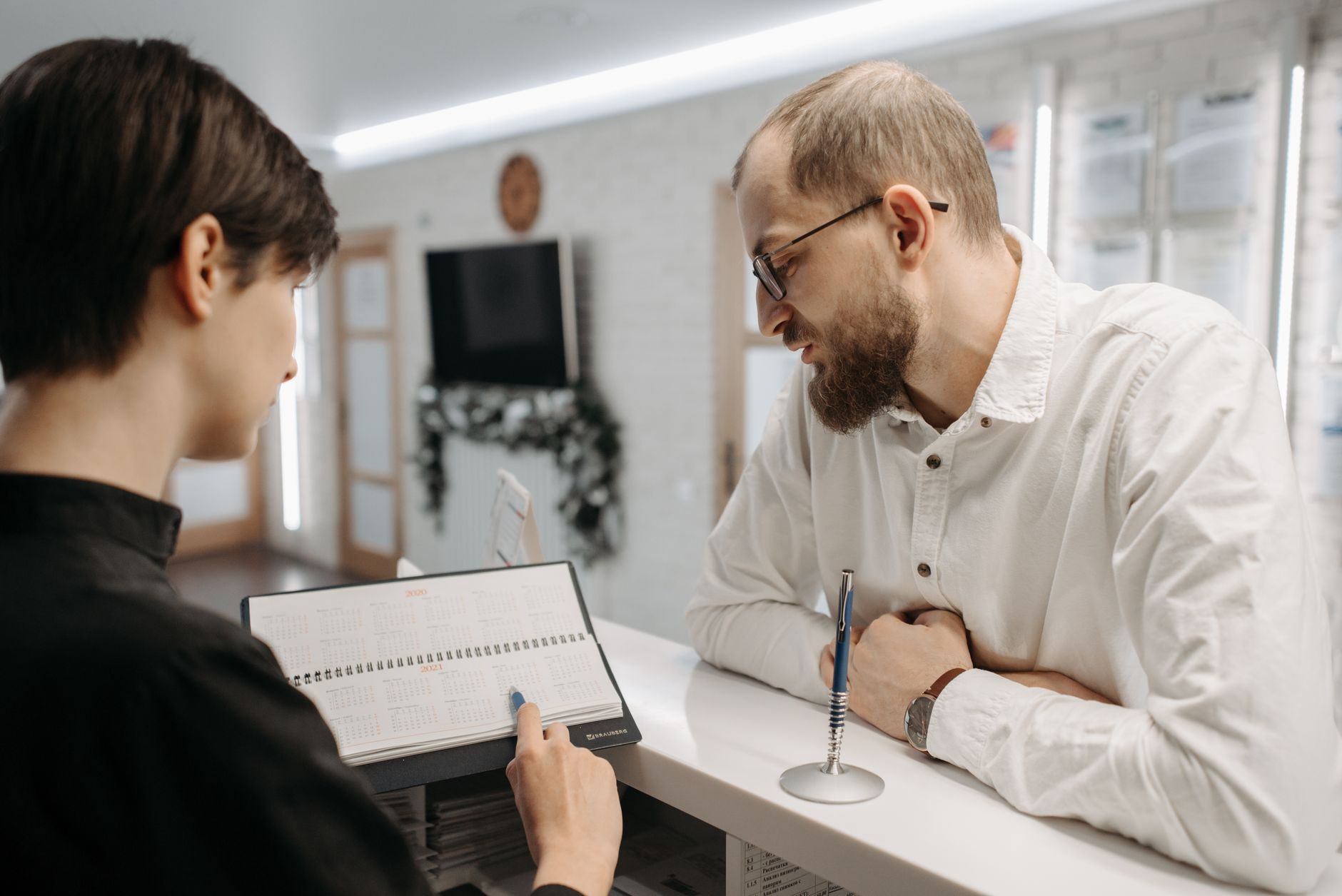
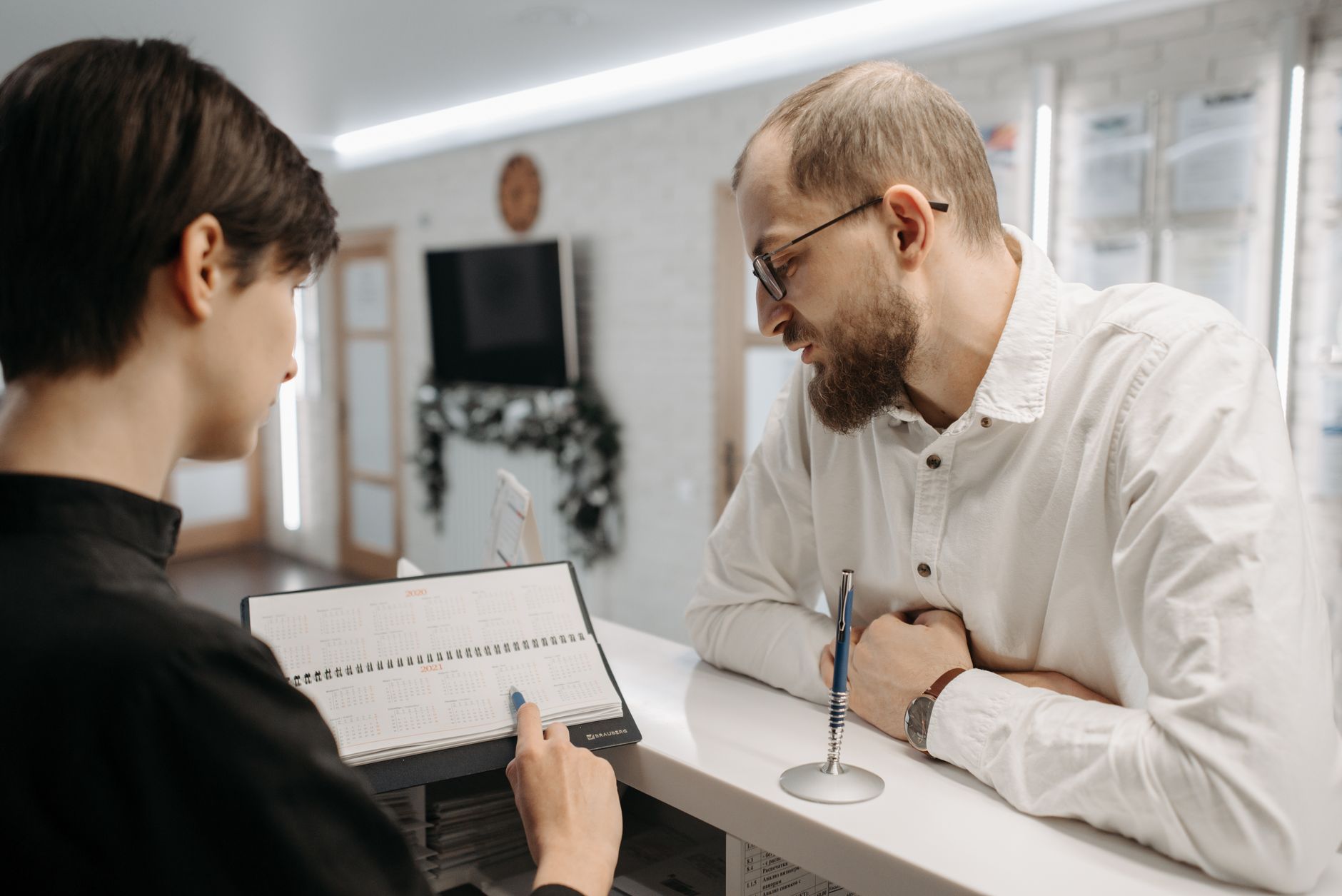
Receptionist and patient discussing the schedule at the clinic's front desk
The clinic code is what links this counter to the WhatsApp number.